
Visited in March 2026. Verified by an STB-licensed tourist guide.
A Free Gallery on Maxwell Road
TL;DR
Worth it? Yes, to see how Singapore was planned
Location: The URA Centre, 45 Maxwell Road
Getting there: Maxwell (TE18) or Tanjong Pagar (EW15)
Tickets: Free. Groups of more than 20 must book
Must try: The Central Area Model
Good to know: Partly closed from 1 December 2026
Fifty Years of Planning in One Building
The Singapore City Gallery is a free gallery inside the URA Centre at 45 Maxwell Road. It is run by the Urban Redevelopment Authority (URA), a statutory board under the Ministry of National Development.
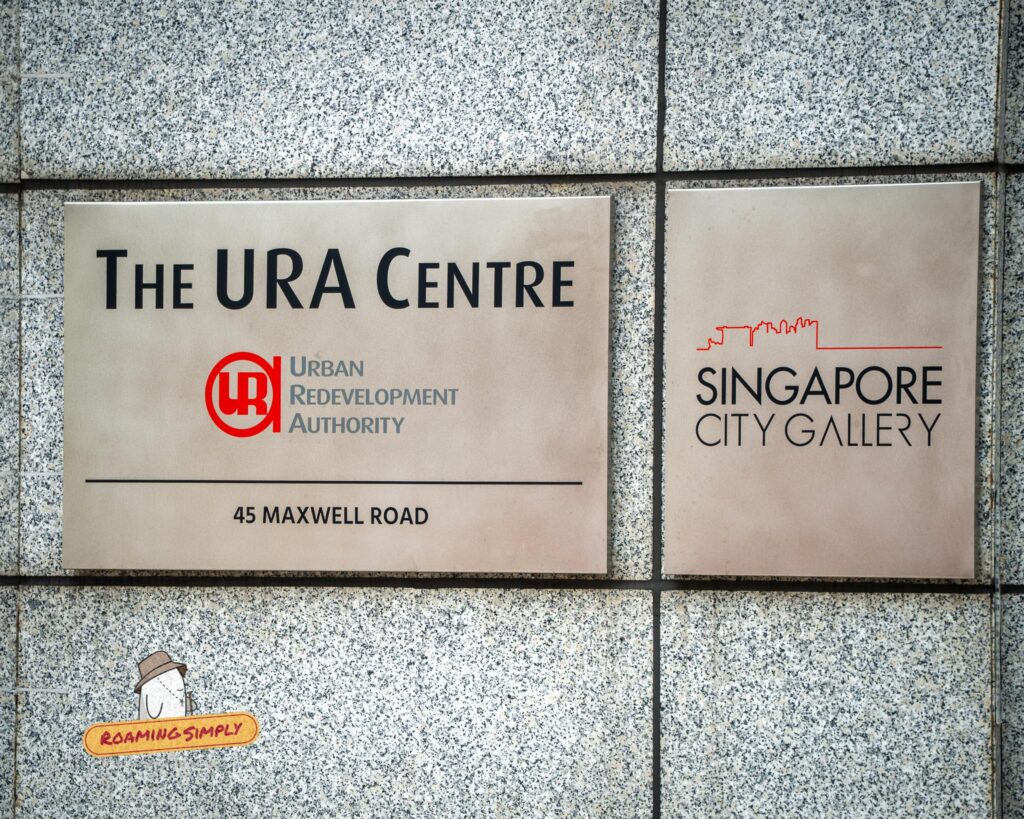
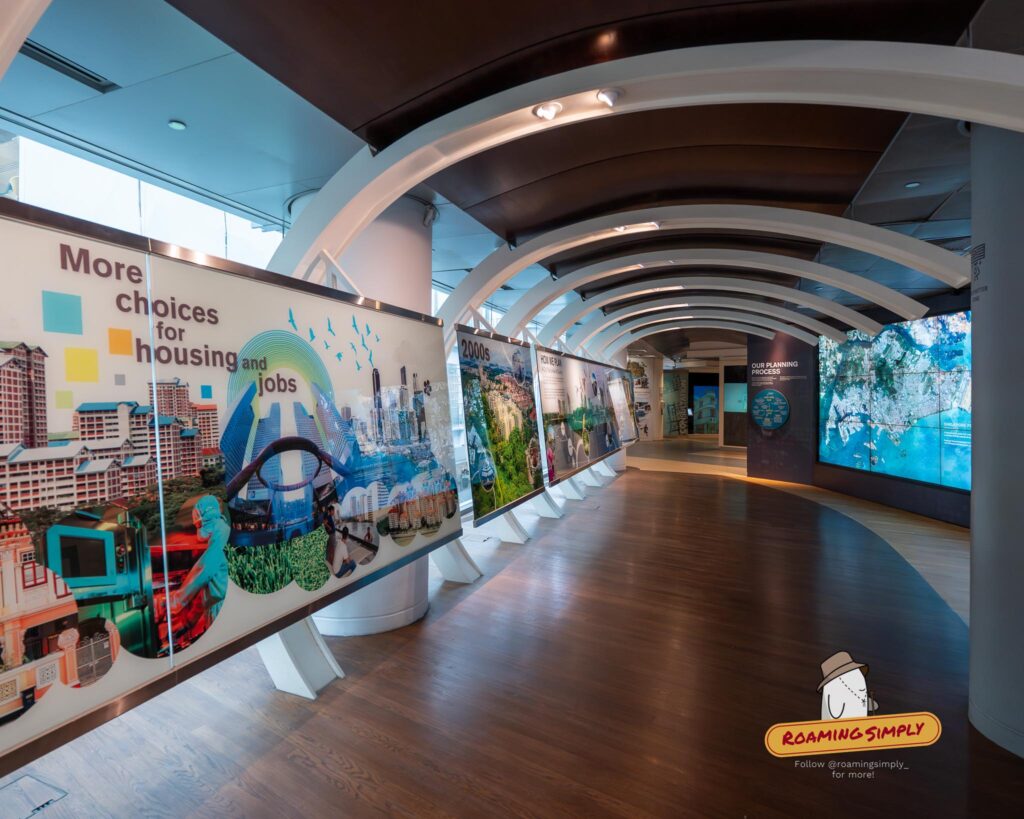
The gallery first opened in 1999. It tells the story of Singapore’s physical transformation over the past 50 years, starting from a new nation in the 1960s. The exhibits are multimedia and interactive, and you are left to discover them yourself, at your own pace.
How does an island with limited land and resources plan for housing, transport and green spaces? And how does it weigh new development against conserving old buildings? Those are the questions the gallery answers. The planning is done in two steps. The Concept Plan guides development over the next 40 to 50 years, and the Master Plan turns that into a statutory plan for the next 10 to 15.
The Central Area Model
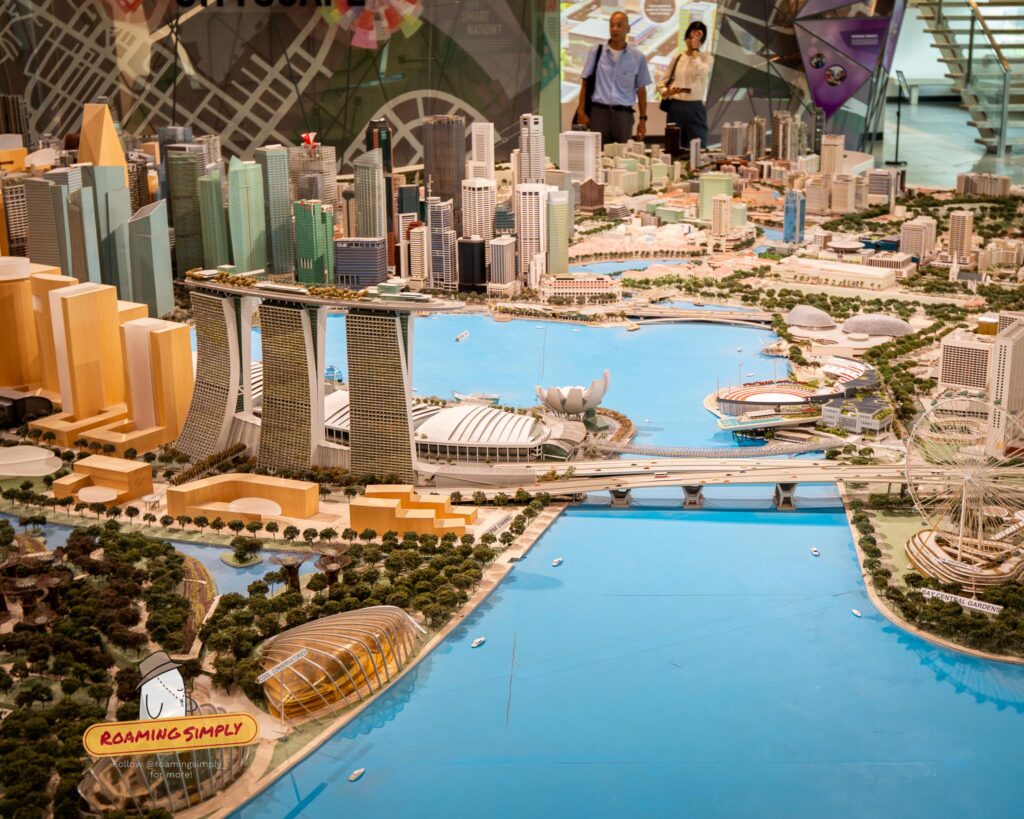
The Central Area Model is the highlight of the gallery. It is a large architectural model of the city centre, built to scale, and you look down on it as if from the air.
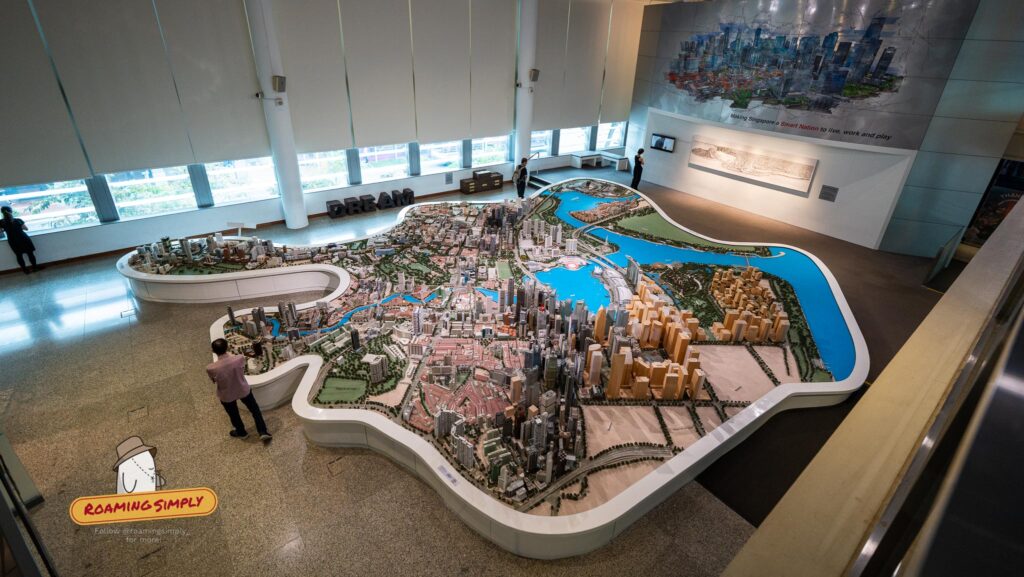
We picked out Marina Bay Sands, the ArtScience Museum, the Singapore Flyer and the domes of Gardens by the Bay, then traced the Singapore River through the city. A light and sound show plays over the model and takes it from day to night. Our favourite photos came from here. Among the other displays is a long ink drawing of the city skyline by the British artist Stephen Wiltshire, who drew it from memory.
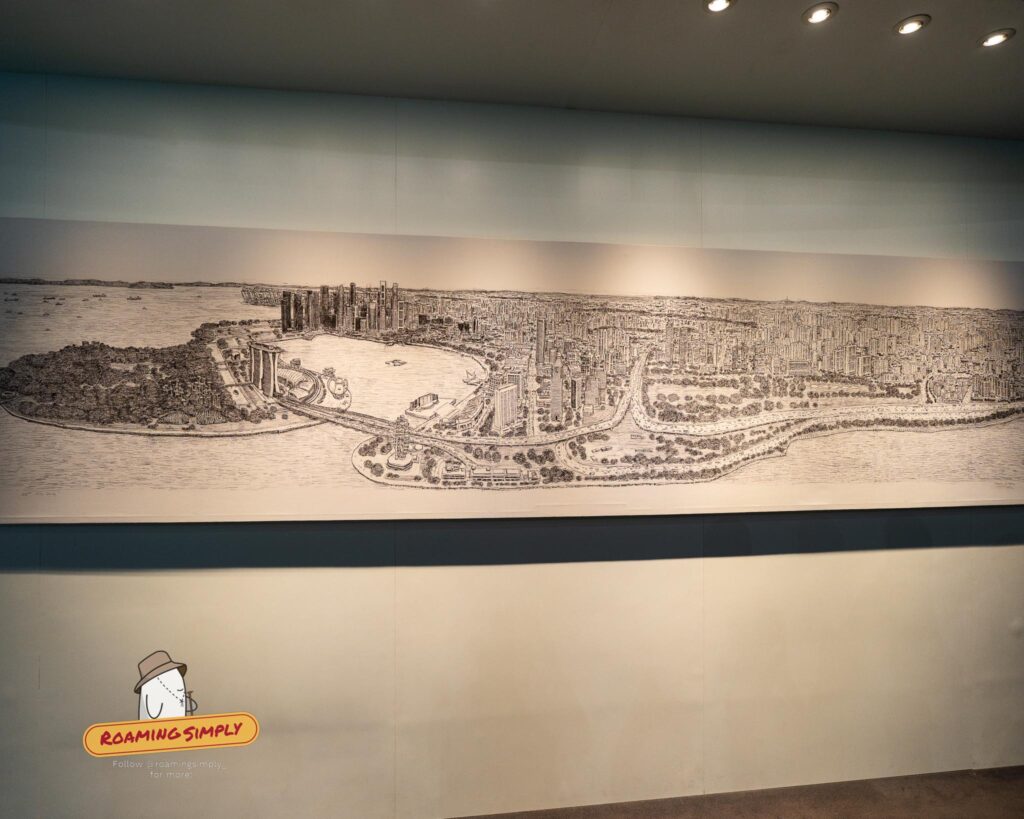
The Island-wide Model and the Light Shows
The gallery uses a lot of projection and light alongside its physical models. In one room, step onto the footprints marked on the floor and a show starts. A future city skyline is projected across the walls and the floor, with light and sound.
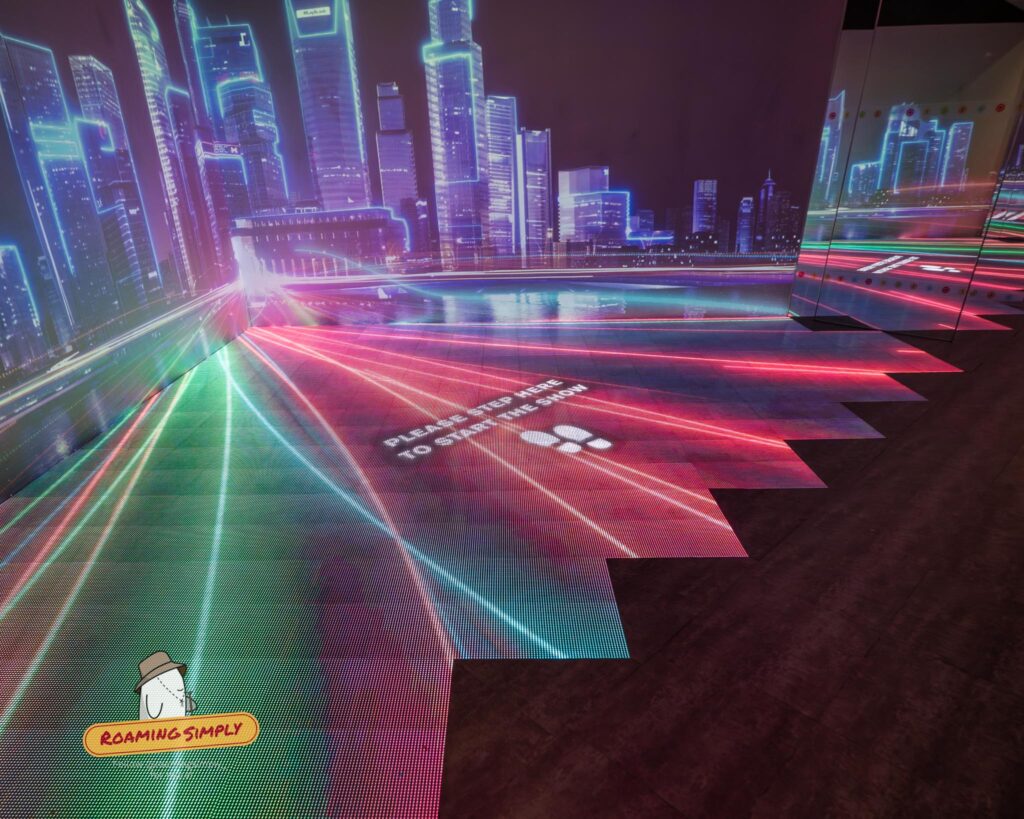
There is also a projection mapping show on Singapore’s urban planning strategies and key landmarks around the city. It lasts three minutes and runs every 20 minutes, starting on the hour. The gallery has an island-wide model too, with a show of its own.
A Brush With History
This is the conservation exhibit. Brush your hand over an old image of a conserved building or structure, and it changes to show what the place looks like today. Singapore has conserved over 7,000 buildings, in almost 100 conservation areas.
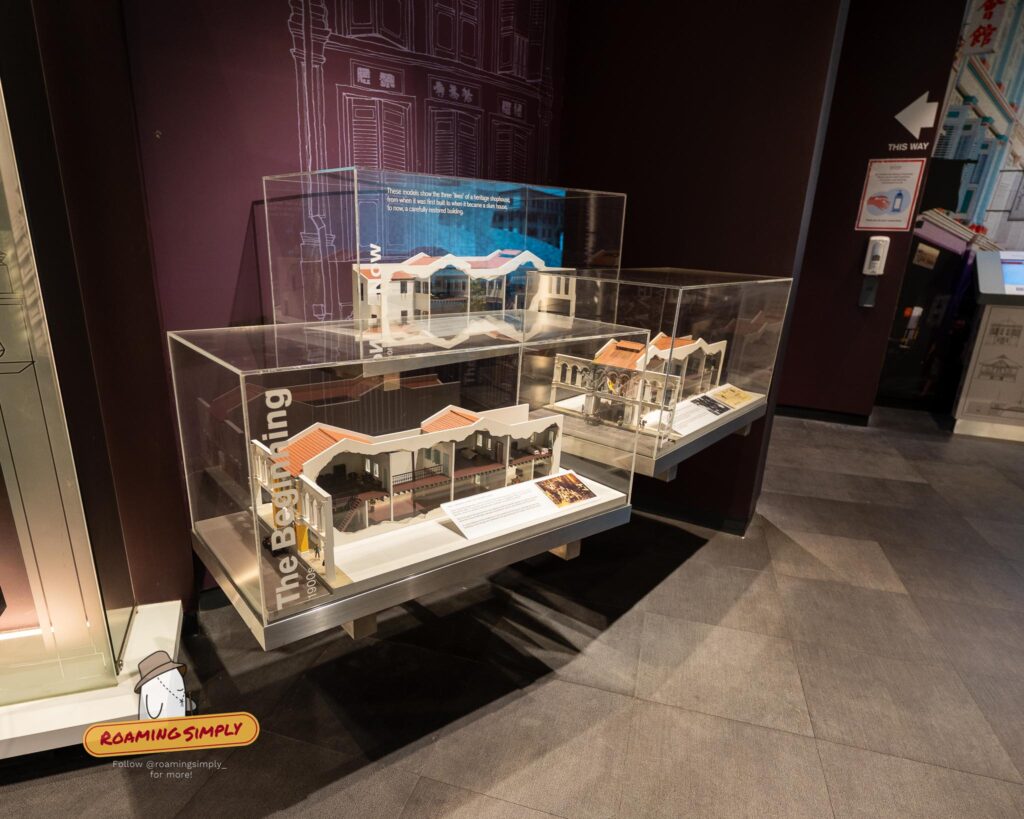
Beside it, three cutaway models show the three lives of a heritage shophouse. First the house as it was built, then the same house as a slum house. The third is the house today, carefully restored.
Mapping Singapore
Mapping Singapore is an exhibit of historical and contemporary maps. Its entrance wall sums it up: “Charting time, space and stories through maps, plans and models.” The maps trace how the coastline and the layout of the city have changed, and how land reclamation has made the island larger over the decades.
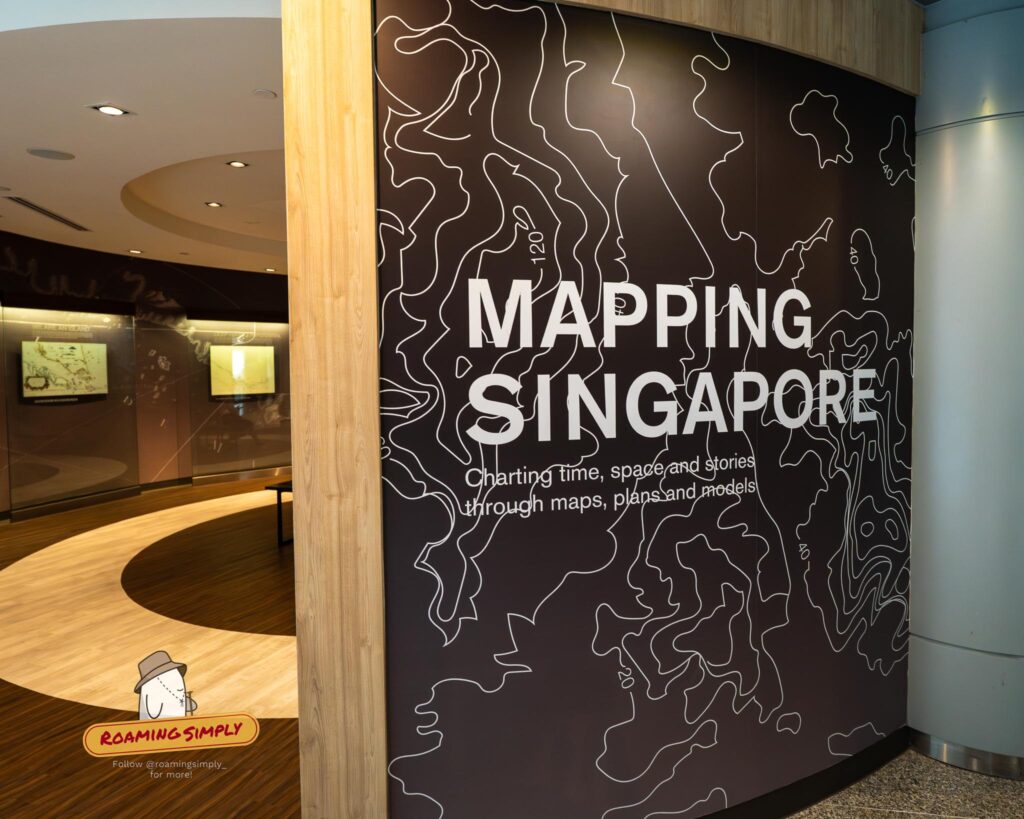
What Runs Under the City
One section covers the urban systems that keep the city going. It opens with an immersive show, then moves on to interactive exhibits on how Singapore handles its water, energy, waste, green and transport needs.
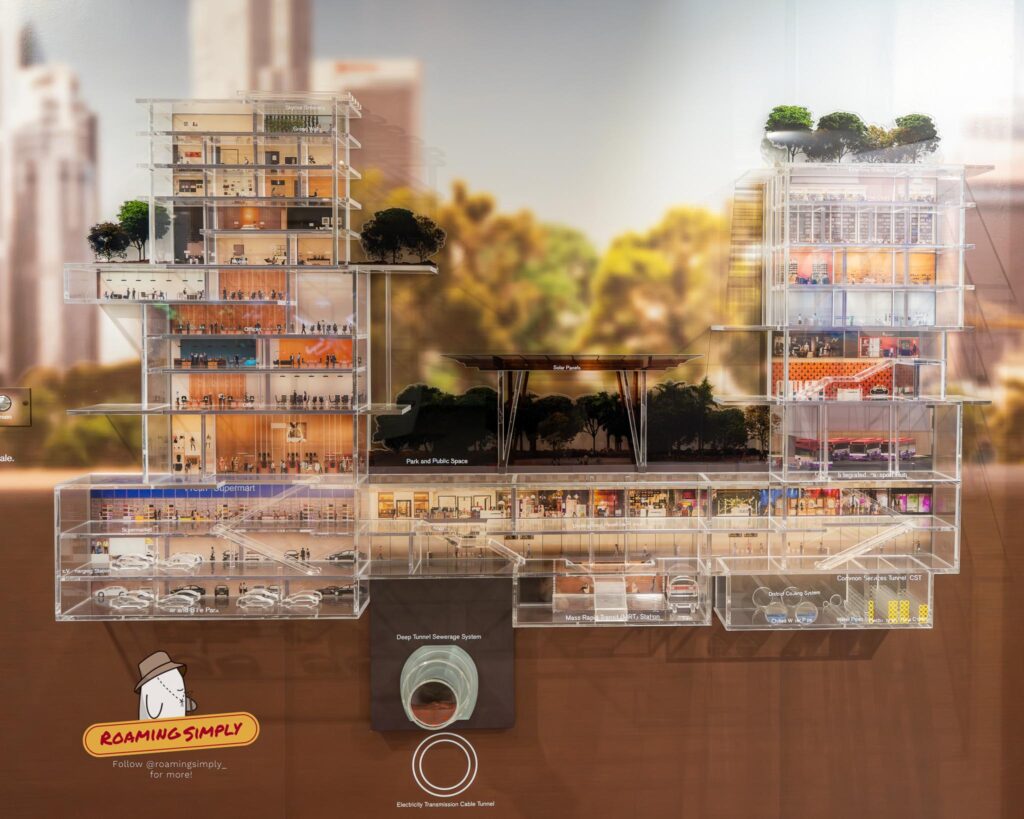
The cross-section model in our photo shows the idea clearly. Above ground are towers with rooftop trees and solar panels. Below them are shops, car parks and an MRT station. Go further down and you find a Common Services Tunnel, a District Cooling System, the Deep Tunnel Sewerage System and an electricity cable tunnel. Other exhibits show factories stacked on top of each other and greenery built into skyscrapers.
Admission, Tours and How Long to Allow
The gallery is about to be revamped. It will be partially closed from 1 December 2026 to 30 April 2027, and fully closed from 1 May 2027. URA expects to reopen it in the fourth quarter of 2027. It has not said which exhibits stay open during the partial closure, so check its visit page before you go.
Admission is free and you can walk in. Groups of more than 20 must book a time slot in advance, and each slot takes up to 50 people. The gallery is indoors and air-conditioned, so it works well in the midday heat or when it rains. We would allow an hour or two.
URA runs one-hour guided tours led by volunteers, but they are designed for the local community and are not intended for organised corporate, private or international group visits. If you want a guided visit, hire a licensed guide through the Singapore Tourism Board’s Tourist Guide Directory. We also run private walking tours with an STB-licensed tourist guide, and a custom route can include the gallery.
Before you go
- The gallery is closed on Sundays and public holidays.
- Food and drinks are not allowed inside. That includes bottled water.
- Large bags, backpacks and luggage are not allowed, and there is no baggage storage in the building.
- Photos for personal use are fine without flash. Tripods and selfie sticks are not allowed.
- Do not touch the 3D models.
- Children aged five and below must be with an adult at all times.
- All levels can be reached by lift, with wheelchair-friendly toilets on each floor. The nursing room and stroller parking are on the second floor.
Getting There
The nearest stations are Maxwell (TE18) on the Thomson-East Coast Line and Tanjong Pagar (EW15) on the East-West Line. Maxwell station sits directly beside Maxwell Food Centre, and the gallery is a short walk from the station. Coaches drop off and pick up along Kadayanallur Street.
What to Do Nearby
Lunch at Maxwell Food Centre
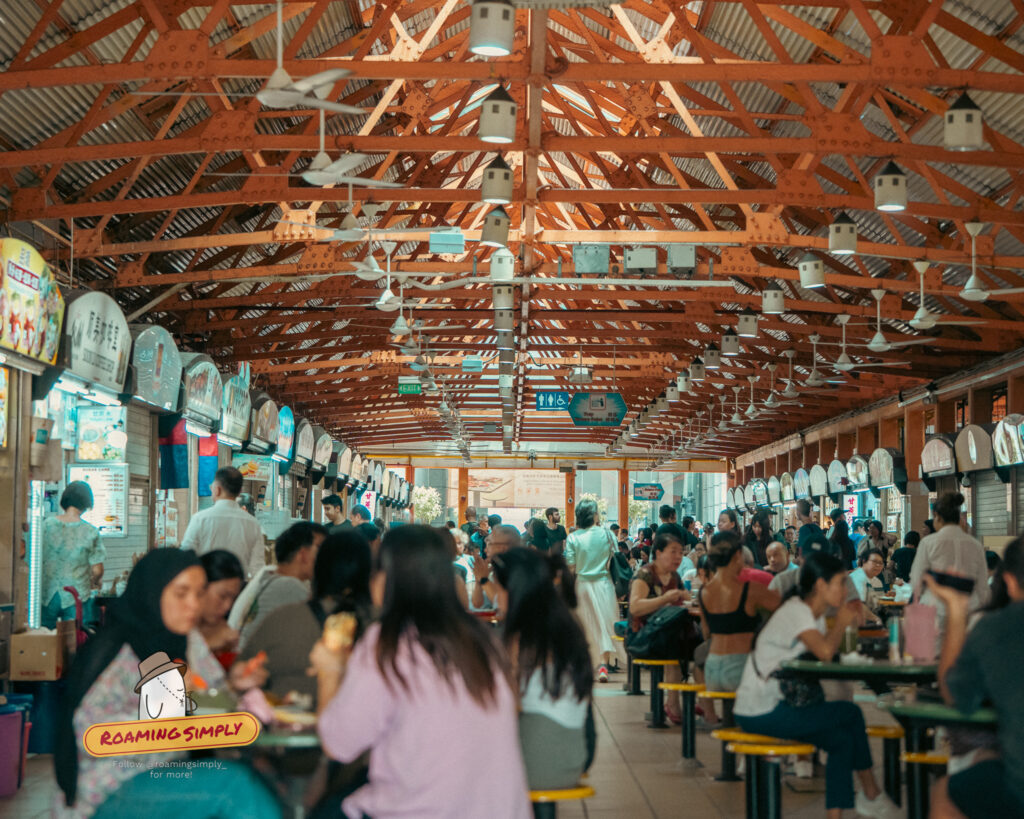
Maxwell Food Centre is directly across the road from the URA Centre, at the junction of South Bridge Road and Maxwell Road. It opened as Maxwell Market in 1928 and became a food centre in 1987. Tian Tian Chicken Rice is one of the stalls here.
Telok Ayer and Thian Hock Keng Temple
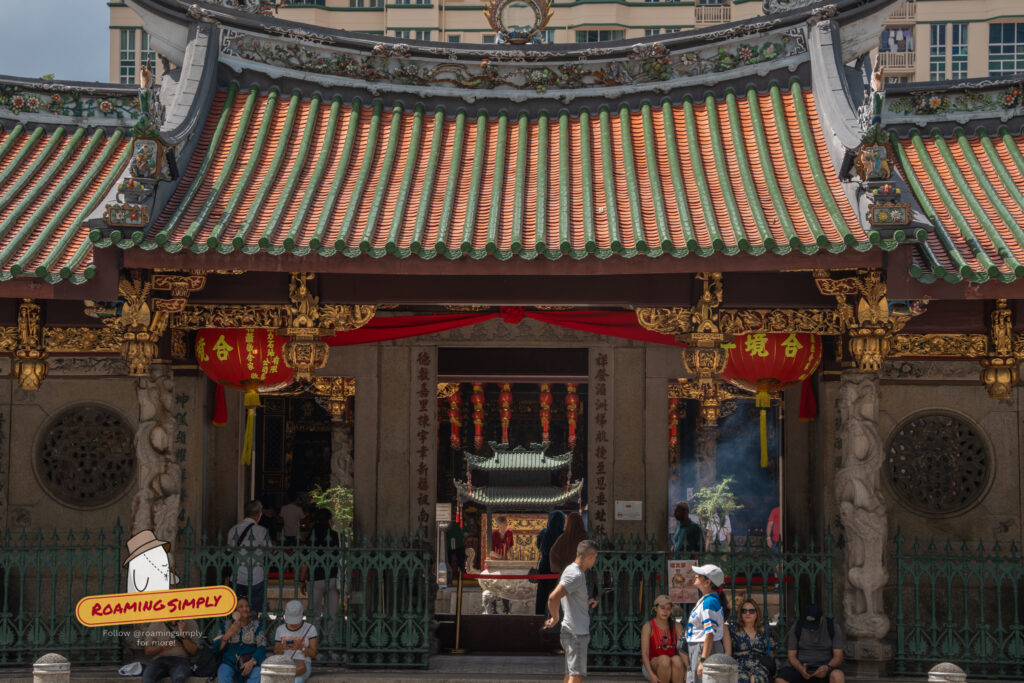
Telok Ayer is a short walk away, its streets lined with restored shophouses and cafes. Thian Hock Keng Temple, a Hokkien temple, is at 158 Telok Ayer Street.
Do These as a Pair
The gallery, then lunch across the road. See the models first, then cross Maxwell Road for chicken rice. Read our Tian Tian Chicken Rice guide.
The Verdict: Is the Singapore City Gallery Worth It?
Yes. The Singapore City Gallery is free, cool and worth the stop.
The Central Area Model is what you come for. The conservation, map and underground exhibits then explain how the city was planned around it.
It suits architecture enthusiasts, history lovers and anyone who wants an indoor activity on a hot or wet day. You go round on your own, and we think the exhibits would mean more with a tourist guide to explain them.
What you read here is our own walk through the gallery. We took the show times, opening hours, house rules and tour details from URA.
It is closed on Sundays, so go between Monday and Saturday, then cross the road for lunch.
Your Guide to Visiting the Singapore City Gallery
Address45 Maxwell Road, The URA Centre, Singapore 069118
Phone+65 6221 6666 (URA general enquiries)
Opening hoursMonday to Saturday, 9am to 5pm. Closed on Sundays and public holidays. Partially closed from 1 December 2026 and fully closed from 1 May 2027. Checked October 2026 at ura.gov.sg
AdmissionFree
Nearest MRTMaxwell (TE18) or Tanjong Pagar (EW15)
Website and social
Photographs by RoamingSimply.
More things to do in Singapore
Verified on site, with ticket prices and opening hours checked.
 Attractions, Featured, Play, Singapore
