
Visited in May 2026. Verified by an STB-licensed tourist guide.
A Fort Siloso Guide
TL;DR
Worth it? Yes, if the Second World War interests you
Location: Siloso Point, Sentosa
Getting there: Cable car, Sentosa Line to Siloso Point
Price: Free
Pace: 1.5 to 2 hours on foot, with stairs in the tunnels
Good to know: Rest area under the Surrender Chambers. No rain shelter outdoors, so bring an umbrella in monsoon season
A Wartime Fort on Sentosa
Sentosa is home to Universal Studios Singapore, beaches and resorts. It is also home to Fort Siloso, a preserved coastal fort that you can walk for free. Sentosa calls it Singapore’s only preserved WWII fort.
This guide follows the route we walked: up a lift to the Skywalk, across to the fort, down into Tunnel B and the magazine, and on to the Surrender Chambers. Opening hours and transport come after that.
The Fort Siloso Skywalk
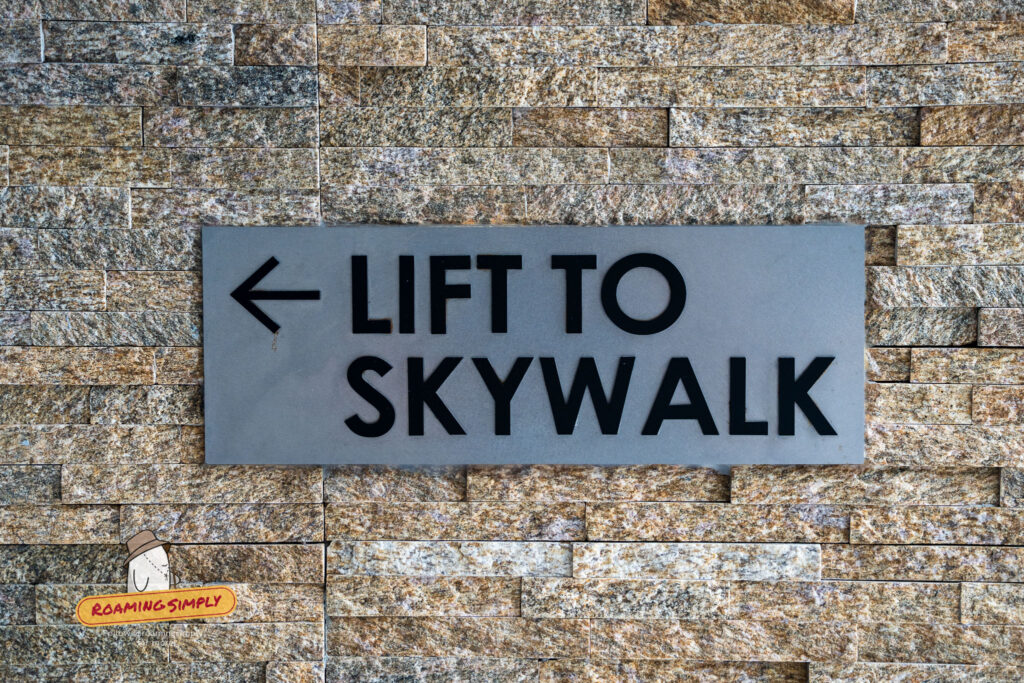
The visit starts with a lift. A sign on the wall points you to it, and the lift carries you up to the Fort Siloso Skywalk, an 11-storey treetop walk that leads to the fort.
The walk is worth doing for its own sake. On one side you look out to Keppel Harbour and the ships in the strait. On the other you see Sentosa’s beaches, the cable cars passing overhead and the forest below.
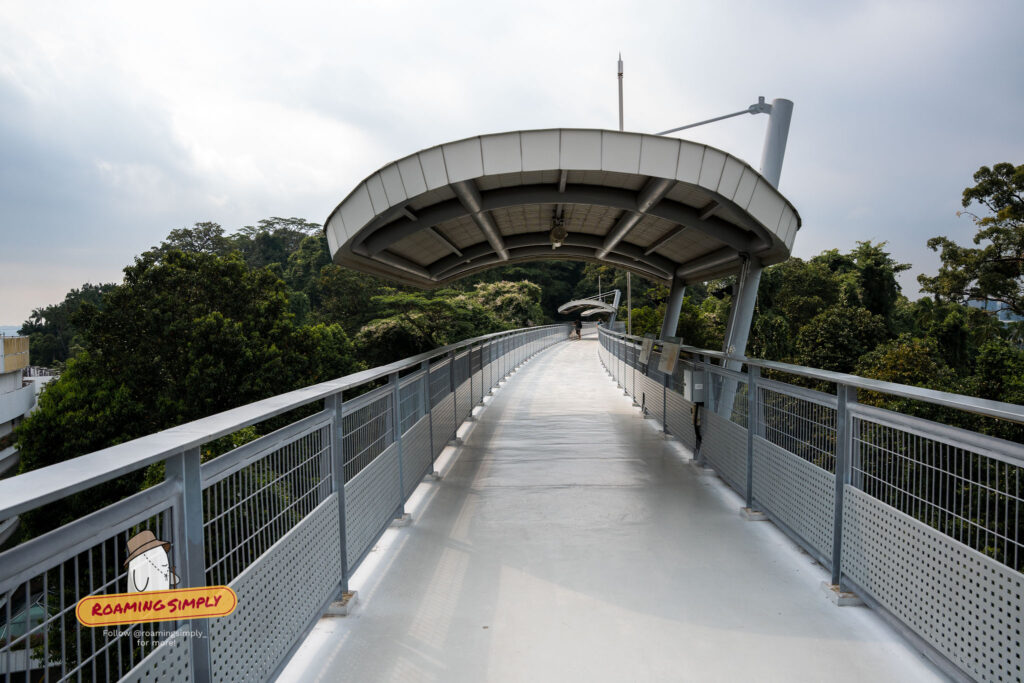
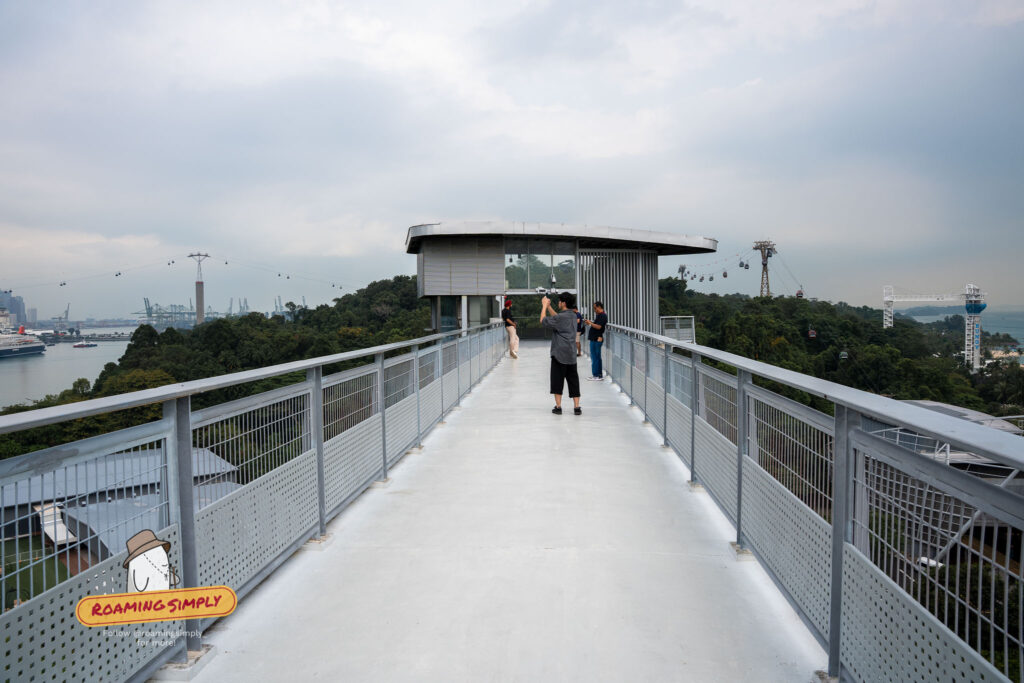
The lift is large and the bridge is a level path, so the Skywalk suits a stroller or a wheelchair. For photographs, stand in the middle of the bridge. The railing lines lead towards the harbour on one side and the cable car towers on the other.
The Fort and Its History
The Skywalk ends inside the fort grounds. A site map in the grounds sorts the fort into colour zones: Singapore During WWII in red, The Life of a Soldier in yellow, Siloso Point in blue and Waves of the Straits in grey. It also marks a Gun Trail, a Heritage Trail and three tunnel complexes, named A, B and C.
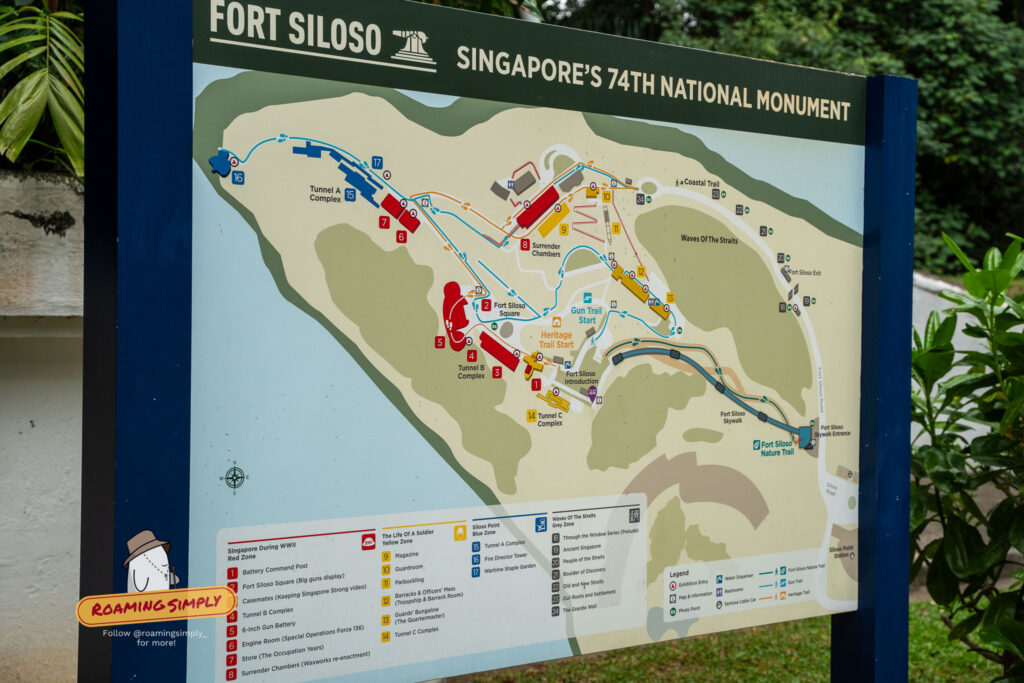
Fort Siloso was gazetted as a national monument on 15 February 2022. According to the National Heritage Board, it was built in 1878 as one of three forts on the island, with Fort Connaught and Fort Serapong, to protect New Harbour. Its designer was the Colonial Engineer Henry McCallum, and it was one of the first forts in the world to use an open artillery battery design.
The name Siloso is said to come from a Malayan word meaning rock. The island itself was called Pulau Blakang Mati before it was renamed Sentosa.
During the Japanese Occupation the fort served as a prisoner-of-war camp for Australian and British soldiers. When British forces withdrew from Singapore in 1967 it came under the command of the Singapore Armed Forces. It has been an outdoor military museum since 1974. The gazetted site takes in 11 structures, including the casemates, four gun emplacements and the three tunnel complexes.
The Guns and Tunnels
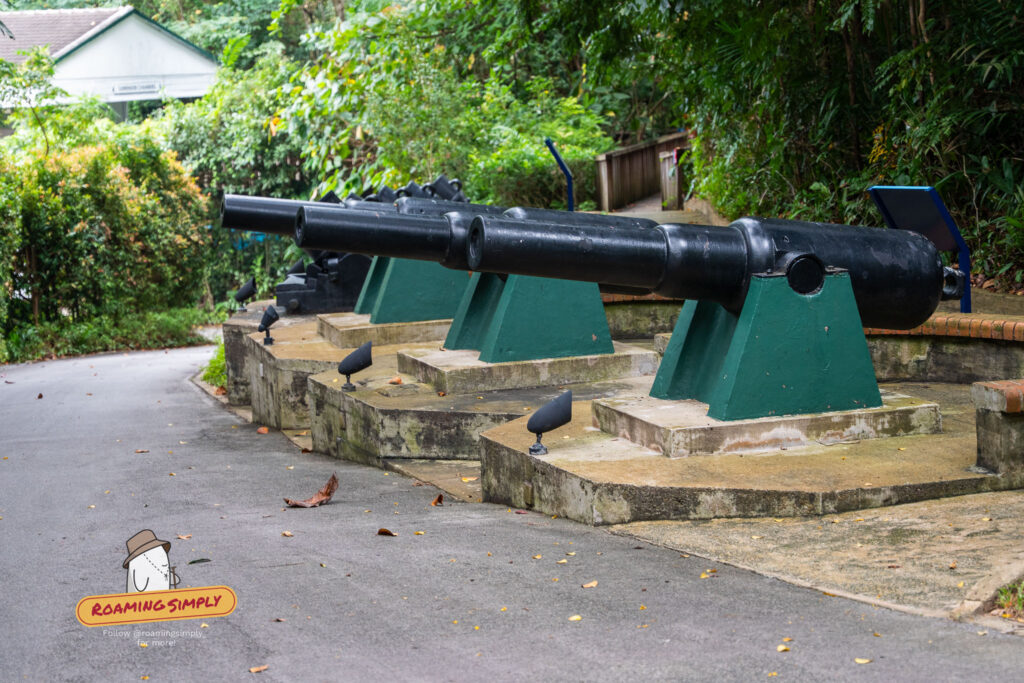
The guns are the first thing you see when you enter the fort grounds. They are hard to miss, and they make plain what this place was built to do. The more interesting story is underneath them.
Down Into Tunnel B
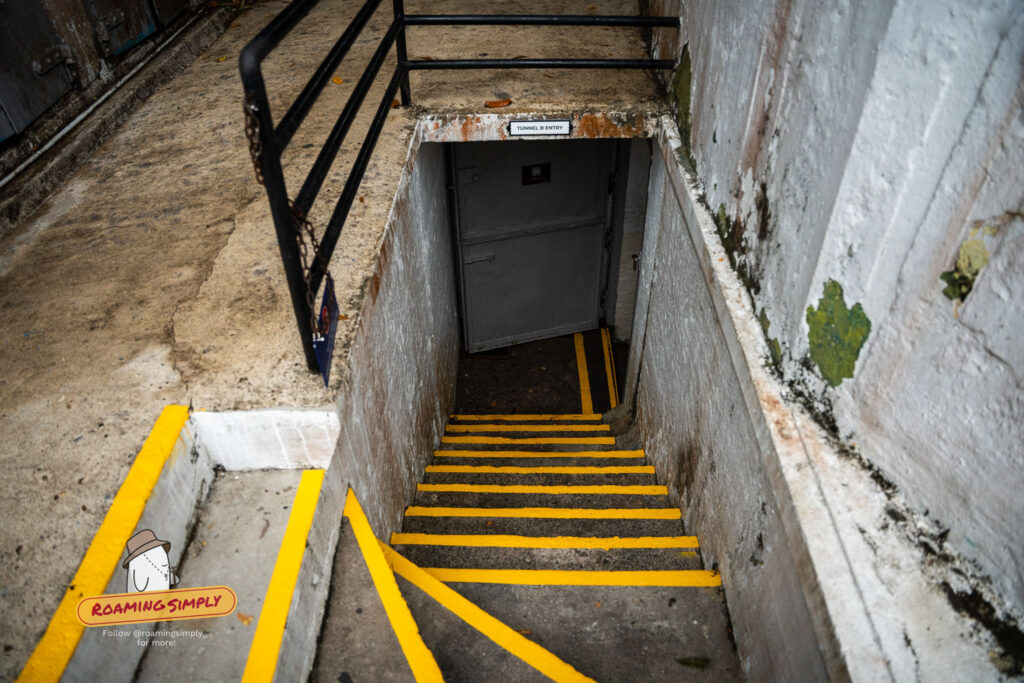
Entry points are scattered across the fort. The one for Tunnel B is a concrete staircase with a steel door at the bottom and yellow safety lines on the steps. It takes you below the surface. The temperature drops as you go down, and your eyes need a moment to adjust.
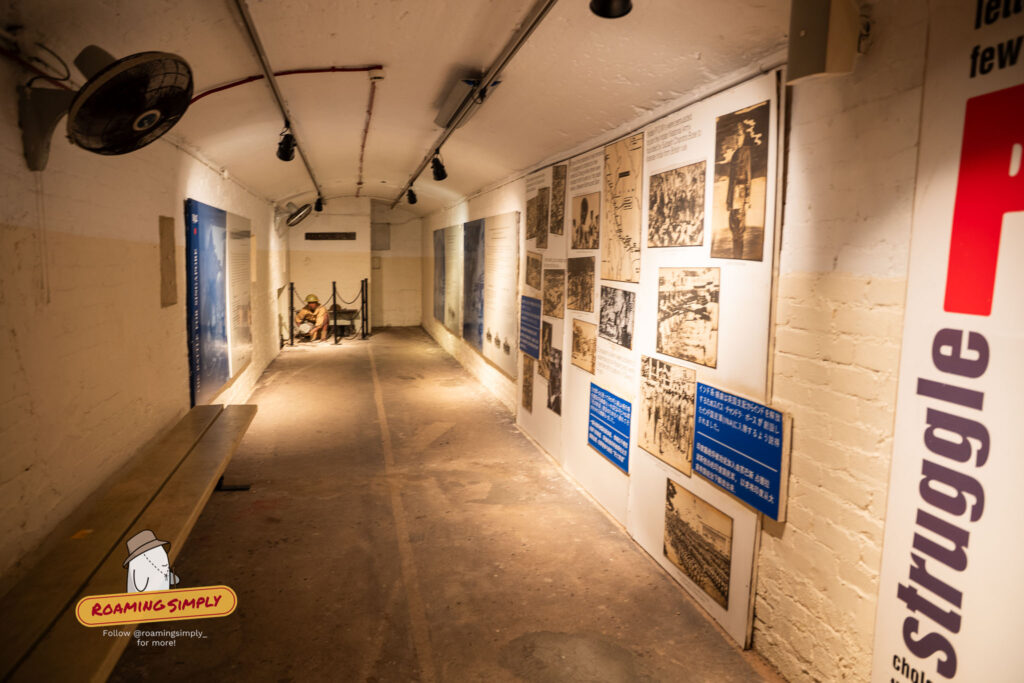
Inside, the walls carry the wartime record. Archival photographs hang along the corridor with captions in English and Japanese. A long bench runs beside them if you want to sit and read, and a wax soldier stands at the far end.
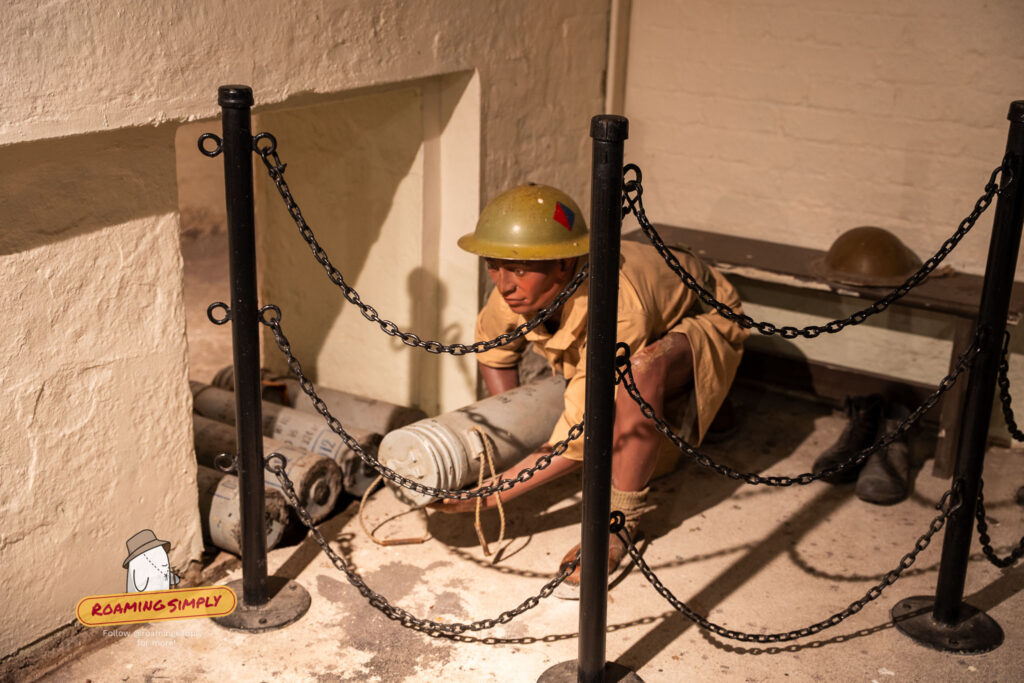
The wax figures in the tunnels are doing unglamorous work. They crouch low with their hands full. The one in our photo is handling a shell at ground level. There are no heroic poses, and the choice works. We came away with a clearer sense of what a coastal artillery posting involved than a storyboard gives.
The Magazine
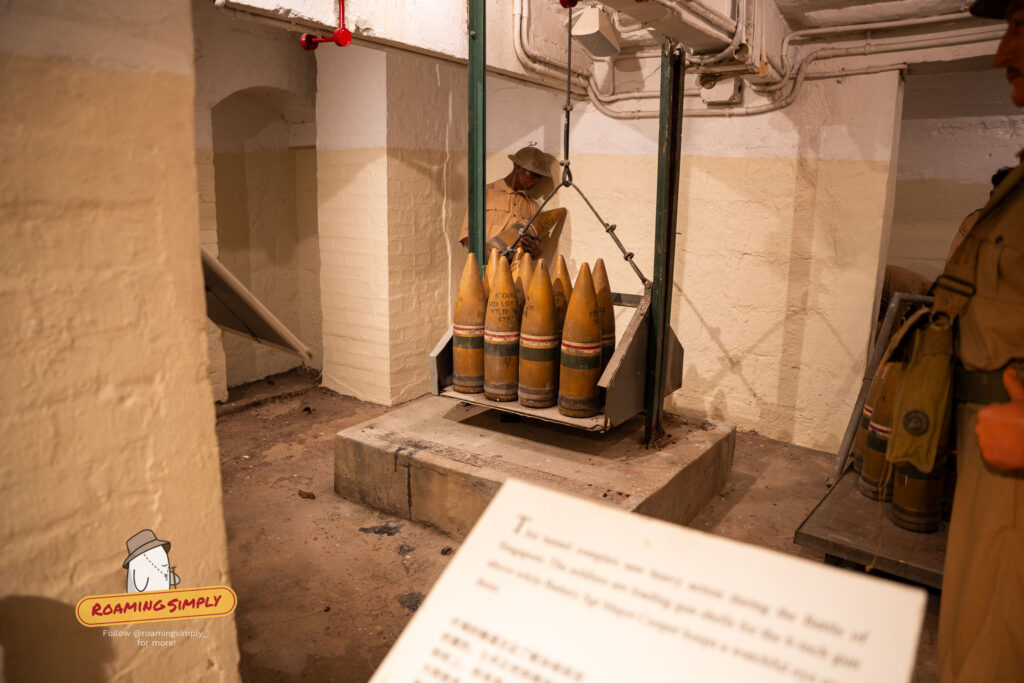
In the magazine, 6-inch shells stand on a hoist, marked and colour-banded, with a wax figure loading them. The panel beside it explains that the soldiers are loading shells for the 6-inch gun. The work was done by hand, in the dark and in the heat.
What the Guns Did in 1942
There is an old story that Singapore’s coastal guns pointed the wrong way. The National Heritage Board’s account of this fort says otherwise. Most of the guns had all-round or near all-round traverse and could be turned landwards. From 11 February 1942 the guns of Fort Siloso engaged Japanese troops at the western end of the island, in particular at West Coast Road and the Jurong River.
NLB Infopedia adds that the guns fired on troops advancing towards the city from Tengah Air Base. On 13 February the fort and Labrador Battery gave supporting fire to the defending forces, which included the 1st Battalion, Malay Regiment.
The weak point was the ammunition. The battery held armour-piercing shells, designed to damage warships and markedly less effective against infantry. At 5am on 14 February 1942 the British destroyed their own battery to keep the fort out of Japanese hands. Singapore surrendered the next day.
Sentosa also points to the Fire Director Tower at the tip of Siloso Point, reached through a tunnel. Soldiers were once stationed there to spot incoming naval ships.
The Surrender Chambers
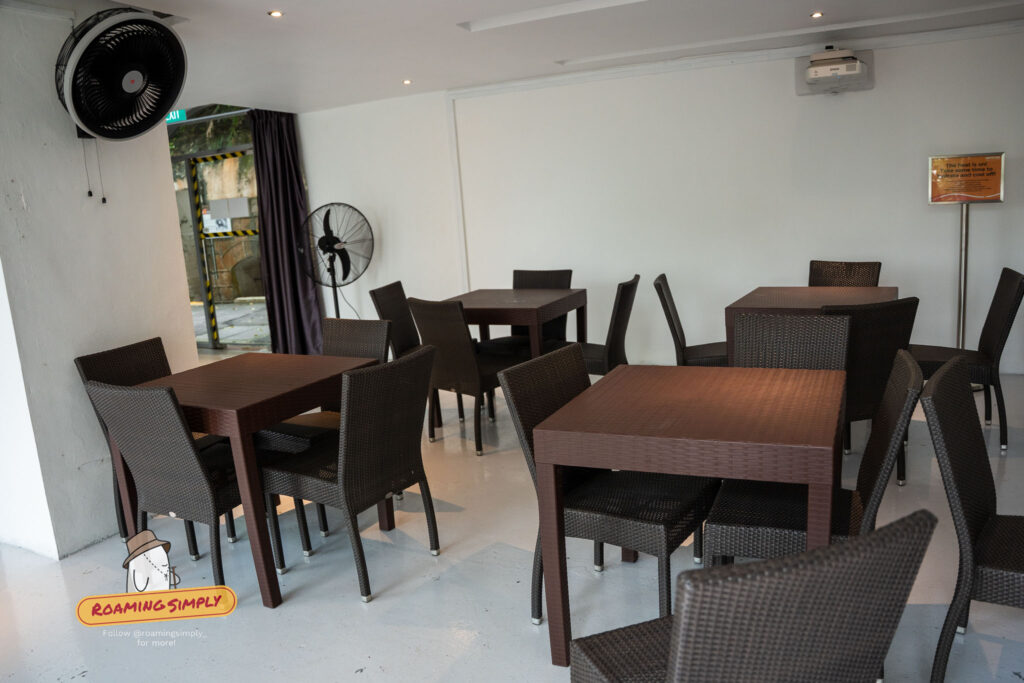
Before you head upstairs, take note of the ground floor. Level 1 has a small rest area with tables, chairs and a wall fan. It looks unremarkable. After the Skywalk and the tunnels in the heat, sit for five minutes before you go up.
The Surrender Chambers is on Level 2 and it is air-conditioned. Sentosa describes it as lights, sounds and videos that tell the story of Singapore during the war, from 1942 to 1945. Its two wax scenes are easy to mix up if you rush.
The first shows 15 February 1942. Lieutenant-General Arthur Percival faces the Japanese command at the Ford Factory in Bukit Timah, and Singapore falls.
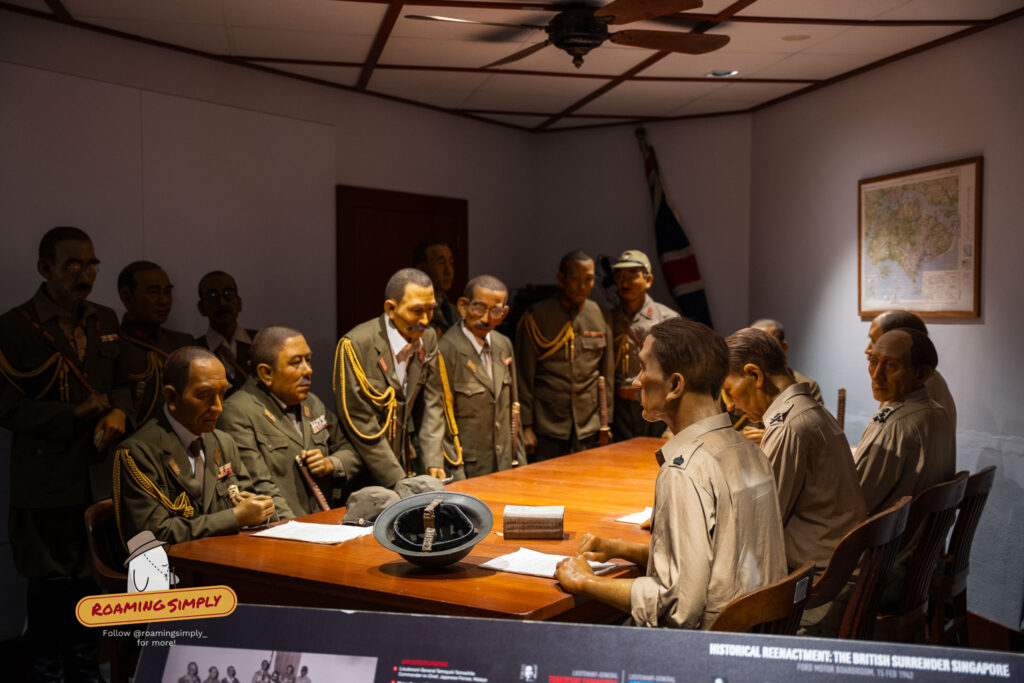
The second shows 12 September 1945, when the Japanese surrendered at the Municipal Building, now City Hall. Vice-Admiral Shigeru Fukudome sits in the Japanese delegation. Across the table are the Allied commanders, among them Air Chief Marshal Sir Keith Park, Major-General Feng Yee of the Chinese military mission and Air Vice-Marshal A.T. Cole for Australia. A pen moves across the Instrument of Surrender, and the occupation is over.
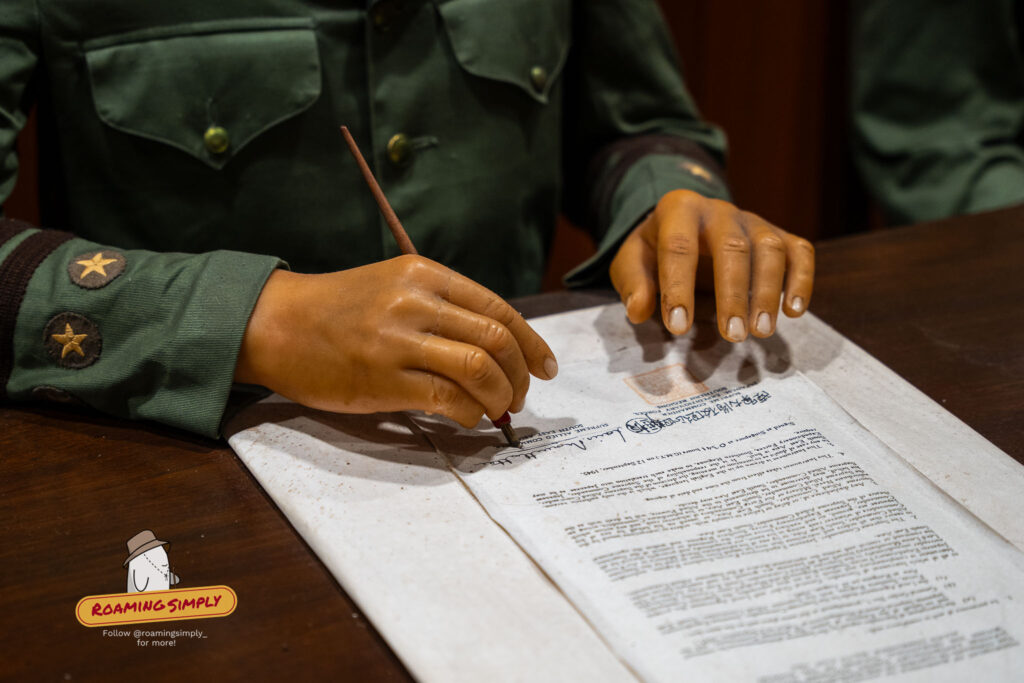
The detail to look for is on that table. The surrender document is readable, with English text and Japanese characters. Name plaques in front of the wax figures tell you who was in the room. Allow at least 20 minutes here, and stay for the story as much as for the cool air.
Getting to Fort Siloso
Fort Siloso is at Siloso Point. We took the Sentosa Line of the Singapore Cable Car to Siloso Point Station and walked to the fort from there. Sentosa also lists the Sentosa Beach Shuttle and Sentosa Bus A, and both stop at Siloso Point.
From the mainland, board the Sentosa Express at VivoCity, Lobby L, Level 3. Island admission by Sentosa Express is S$4. Ride to Beach Station and change there to Bus A or the Beach Shuttle. If you drive, Sentosa says to park at Beach Station Carpark and make the same change. The Mount Faber Line of the Singapore Cable Car boards at Mount Faber or HarbourFront Tower 2 and ends at Sentosa Station, where you switch to the Sentosa Line.
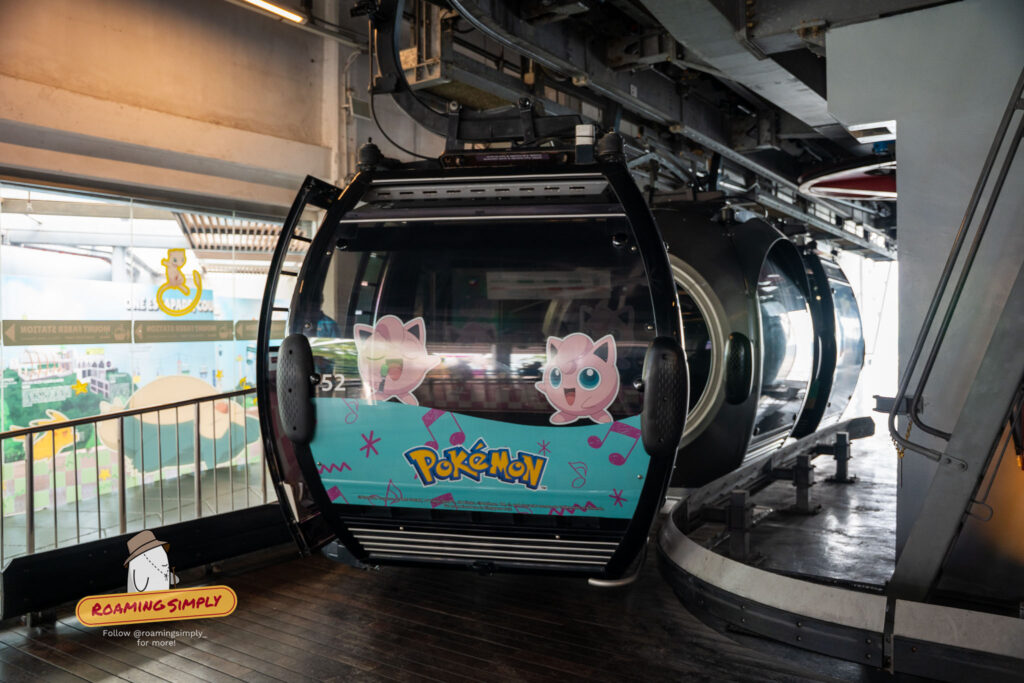
Entry to the fort, the Skywalk and the Surrender Chambers is free. The fort and the Surrender Chambers open daily from 10am to 6pm. The Skywalk opens daily from 9am to 7pm.
Visitor Tips
Plan on 1.5 to 2 hours for the Skywalk and the fort together. These are the tips we would pass on.
Before you go
- Go in the morning, soon after opening, or in the late afternoon. Both keep you out of the midday sun.
- Save the Surrender Chambers for the hottest part of your visit.
- Wear covered, comfortable walking shoes. You will be on your feet for the whole visit.
- Dress in light, breathable clothing and put on sunscreen. In monsoon season bring an umbrella, because the outdoor paths have no shelter from rain.
- Bring a bottle of water. There are vending machines in the fort as a backup.
- Pack insect repellent, especially if you come late in the day.
Do These as a Pair
Fort Siloso, then Fort Canning Park. The Surrender Chambers shows the surrender being signed. The decision to surrender was made in the Battle Box, the bunker under Fort Canning Hill. Read our Fort Canning Park guide.
The Verdict: Is Fort Siloso Worth It?
Fort Siloso is worth it, and its strongest parts are underground and indoors.
The guns are what you see first. What stayed with us was Tunnel B, where the wax figures show the plain labour of keeping a battery firing, and the Surrender Chambers, where you can read the surrender document on the table.
The cost is the heat. The gun platforms have no shelter at midday, and the whole site is quite a walk. The Level 1 rest area and the air-conditioned chambers are where you recover.
Fort Siloso suits anyone interested in the Second World War, and the Surrender Chambers help to depict it. Entry is free. We walked the Skywalk, went down into Tunnel B and the magazine, and went through the Surrender Chambers, so this verdict covers those.
Start on the Skywalk. Finish in the Surrender Chambers.
Your Guide to Visiting Fort Siloso
AddressSiloso Road, Singapore 099981
Phone+65 6736 8672 (Sentosa enquiry line)
Opening hoursFort Siloso and Surrender Chambers: daily, 10am to 6pm. Skywalk: daily, 9am to 7pm. Checked October 2026 at sentosa.com.sg
AdmissionFree
Nearest MRTHarbourFront (NE1/CC29), then the Sentosa Express from VivoCity
Website and social
Photographs by RoamingSimply.
More places to explore in Singapore
Verified on site, with opening hours checked.
 Explore, Featured, Parks & nature, Singapore
Botanic Gardens Singapore: My Favourite Photo Spots
 Explore, Featured, Heritage sites, Singapore
Heritage Museum and CDL Green Gallery at Singapore Botanic Gardens: A Quiet Cultural Stop Worth Visiting
 Explore, Parks & nature, Singapore
National Orchid Garden Singapore: What to See and Why It’s Worth It
 Explore, Featured, Parks & nature, Singapore
Jurong Lake Gardens: Three Gardens Worth Half a Day
 Explore, Featured, Heritage sites, Parks & nature, Singapore
Fort Canning Park Guide: History & The Tree Tunnel
 Explore, Featured, Parks & nature, Singapore
Gardens by the Bay Singapore: What Is Free and What to Pay For
 Explore, Heritage sites, Singapore
Sultan Mosque: Discover the Heart of Kampong Glam
 Explore, Featured, Heritage sites, Singapore