
Visited in May 2026. Verified by an STB-licensed tourist guide.
A Fort Canning Park Guide
TL;DR
Worth it? Yes, for the history. It suits travellers who want to understand Singapore
Location: Fort Canning Hill, off River Valley Road
Getting there: Dhoby Ghaut (NS24/NE6/CC1), Exit B
Price: Free. The Battle Box also has a paid audio tour
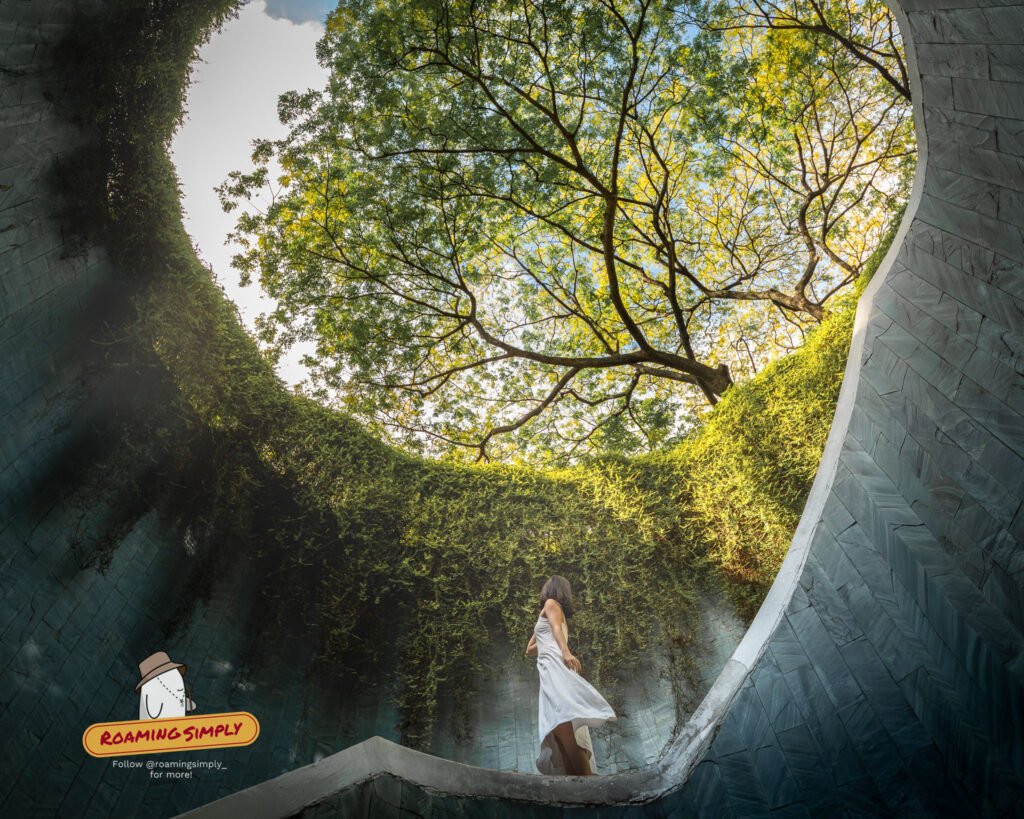
Best photo spot: The spiral staircase of the Tree Tunnel
Good to know: We queued about an hour for the staircase photo, even at 7.30am
Free PDF guide
Fort Canning is Day 1 of our free route
Our free 3 day Singapore guide starts on this hill at 8.30am, before the heat sets in, then moves indoors. Every stop has a map, and the guide is made to read on your phone.
Get the free guideThe Hill Singapore Kept Rebuilding
Fort Canning Park covers a hill in the city centre, and it is free to walk. The photograph people queue for here is the spiral staircase of the Tree Tunnel.
The staircase is one corner of the park. The same hill has been a royal seat, the site of Raffles’ bungalow, a fort, a barracks and a wartime command bunker. This guide covers what is left of each, and how to find the staircase.
Fort Canning Park History
The steps, gates and buildings on the hill come from different centuries, so it helps to know the order. The hill was first known as Bukit Larangan, the Forbidden Hill in Malay. It is believed that the first kings of the island lived here in the 14th century.
By 1822 the British had renamed it Government Hill and built a bungalow here as the residence of Sir Stamford Raffles. Raffles House, near the summit, is named after that bungalow.
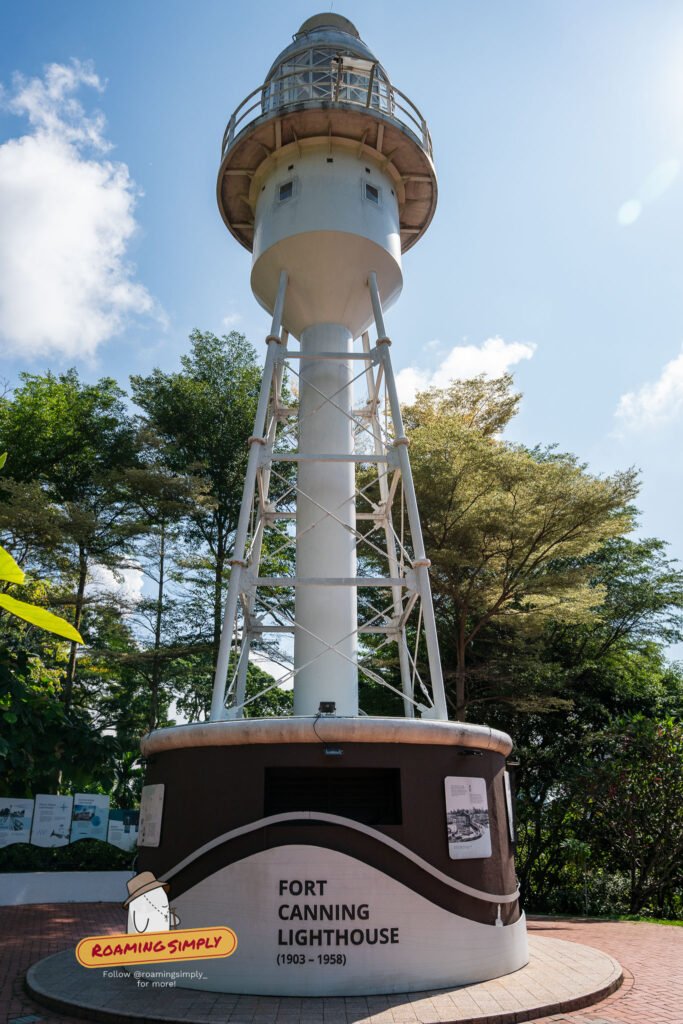
The hill became a fort in 1860 and was renamed Fort Canning after Viscount Charles John Canning, Governor-General and first Viceroy of India. The fortress stood here from 1861 to 1926. In the Second World War the hill held the Battle Box, an underground command centre that we cover further down.
How to Find the Fort Canning Tree Tunnel
The Tree Tunnel is an underground spiral staircase that opens to the sky, with a large tree spreading over the opening. It sits at the edge of the park and is easy to miss. This is the route we use.
- Take the MRT to Dhoby Ghaut.
- Leave by Exit B and walk towards Penang Road.
- Cross the road to the large commercial building at 9 Penang Road.
- Right beside that building is an underpass that leads towards Fort Canning Park.
- Walk through the underpass. At the end, look up. You are at the foot of the spiral staircase.
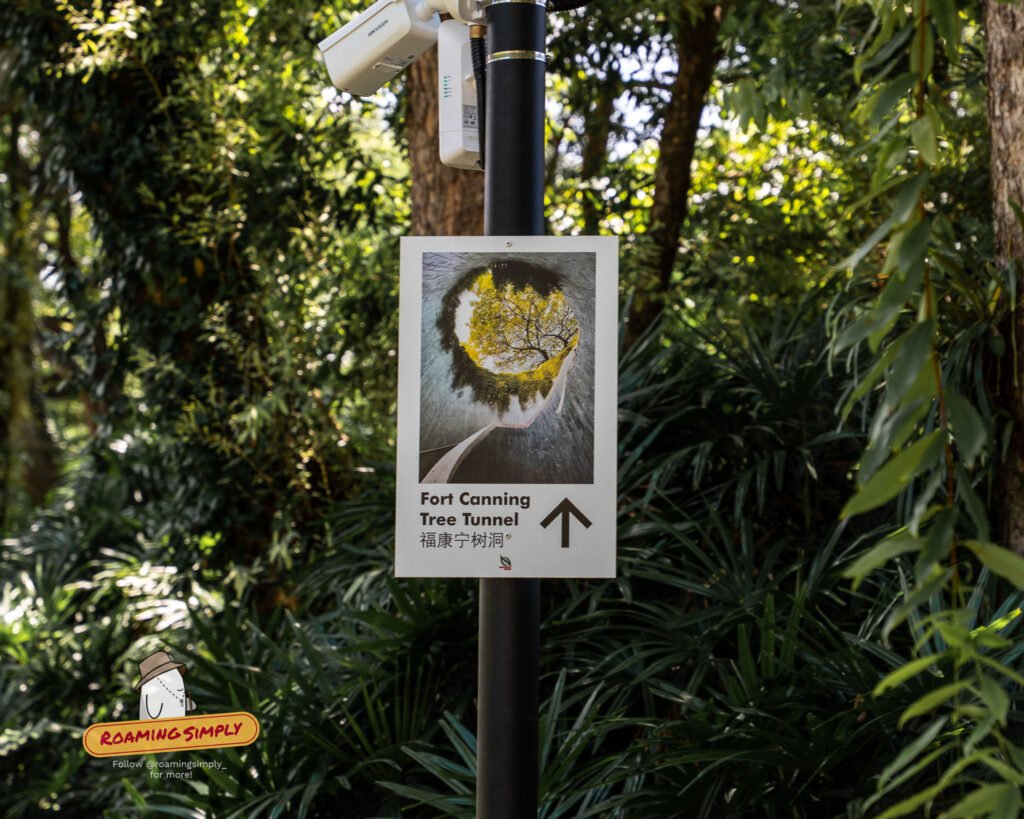
For the photograph, stand at the bottom of the staircase and angle your camera upwards. The curve of the stairs then frames the green canopy above. Expect to queue for your turn.
What to See on the Hill
Give the rest of the park more time than the staircase. These are the four stops we would make, and the Battle Box is the one that matters.
Sang Nila Utama Garden
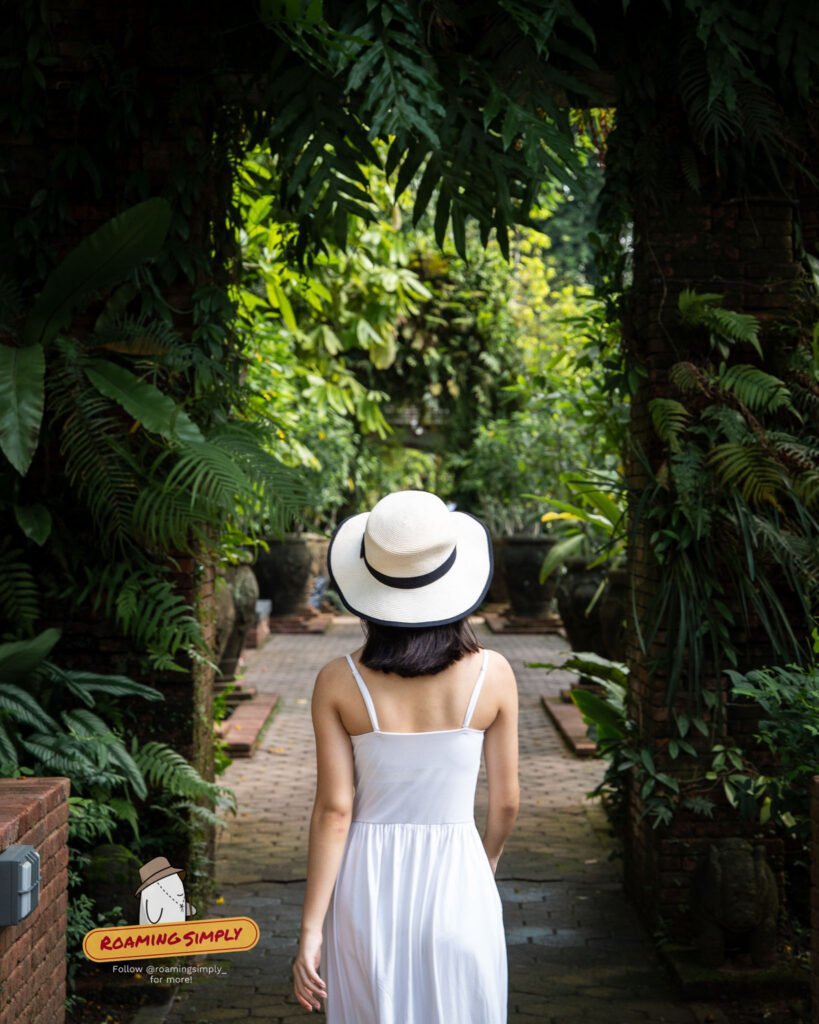
The garden is named after the first ancient king of Singapore, and it recreates a Southeast Asian palace garden of the 14th century. Look for the Javanese split gates that mark each zone, the symmetrical layout and the reflective pool. It is our favourite part of the park.
Fort Gate
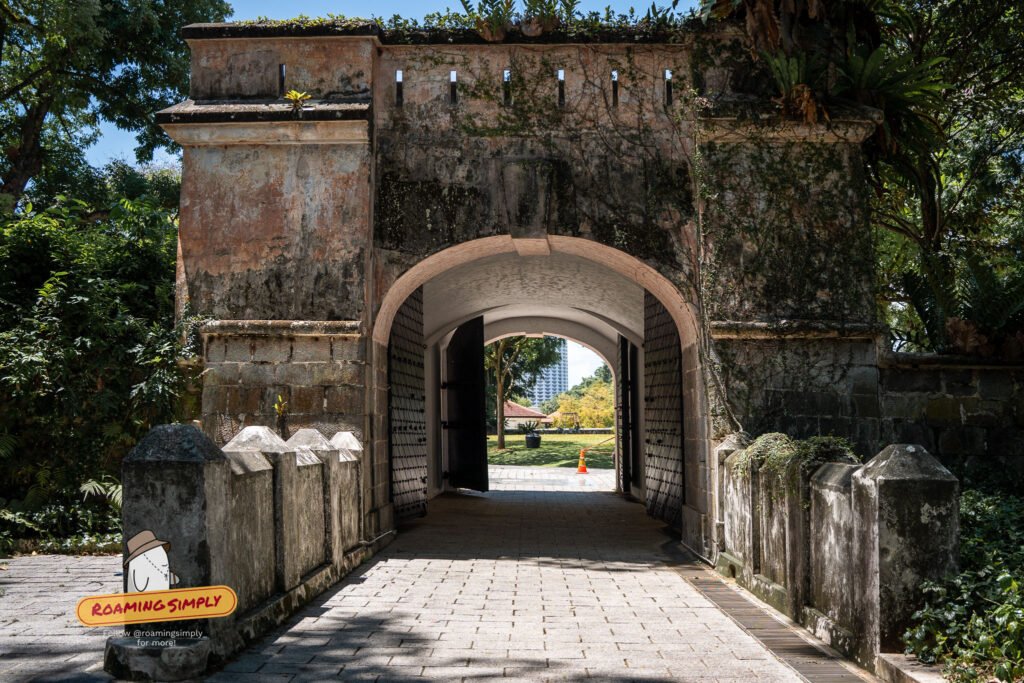
The Fort Gate is a remnant of the fortress that once stood on the hill. You walk through a stone archway set into a thick wall, and it is a good spot for architectural photos.
The Battle Box
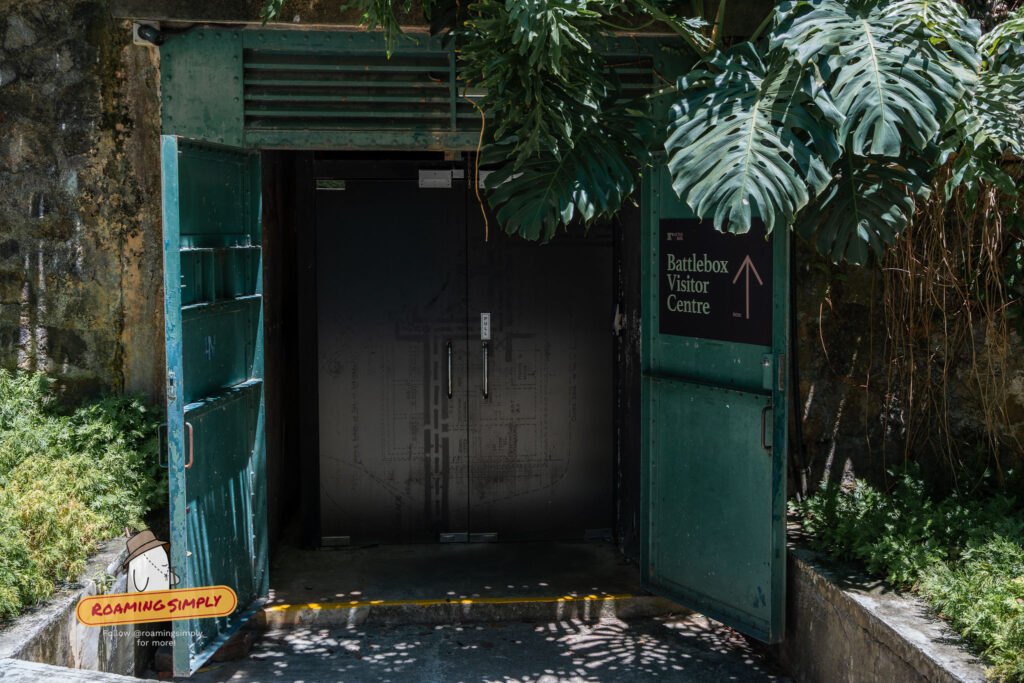
The Battle Box is easy to walk straight past, and to us it is the most significant thing on the hill.
It was built in 1936 and completed in 1939, about nine metres underground. In the final days of the Malayan Campaign, from 8 December 1941 to 15 February 1942, it was the headquarters of the Allied forces defending against the Japanese army. Lieutenant-General Arthur Percival and 11 other commanders made the decision to surrender Singapore here. Three and a half years of Japanese Occupation followed.
The rooms have been recreated from historical records to show what they could have looked like in those last days. Inside are figurines, room displays and text panels.
Battle Box practical info
- Open Tuesday to Sunday, 10am to 6pm, with last entry at 5pm. Closed on Mondays.
- The Basic Experience is free, with limited slots each hour. Reserve it at battlebox.sg before you go.
- The Enhanced Experience adds a 40-minute audio tour and two projection rooms. It costs S$20 for an adult and S$15 for a child aged 5 to 17, with lower prices for locals.
- For the audio tour, bring your smartphone and earphones. The audio devices on site are limited.
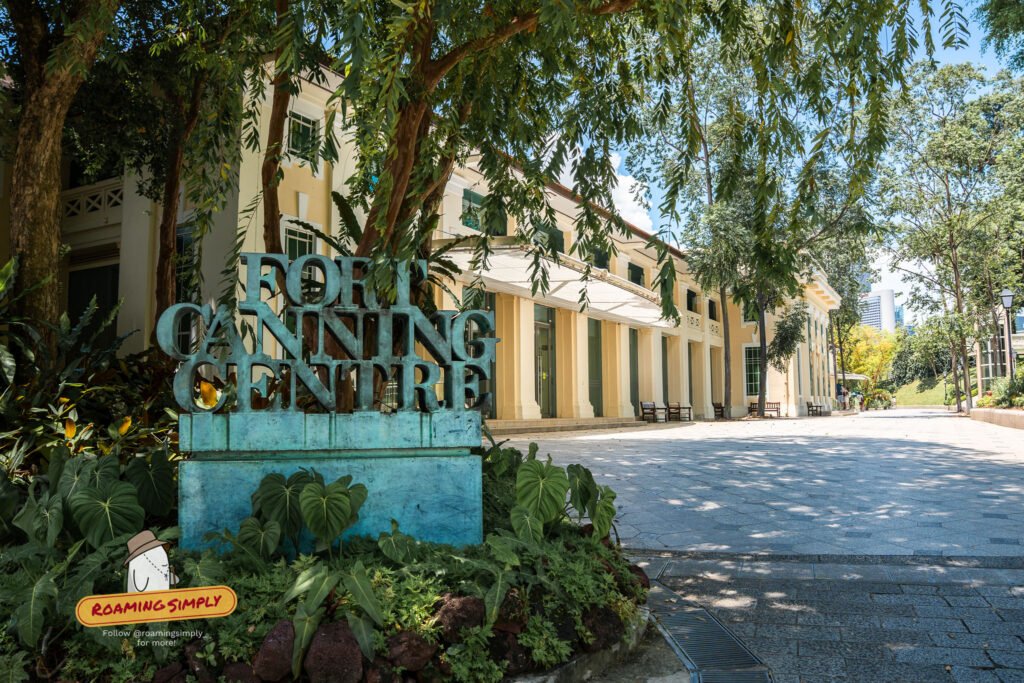
- The bunker is not wheelchair accessible and has no restrooms. The nearest are at Fort Canning Centre.
- Set aside one hour for the visit.
Fort Canning Heritage Gallery
The Heritage Gallery is free, air-conditioned and well put together. It traces more than 700 years of the hill’s history in five zones over two levels of Fort Canning Centre. On display are artefacts excavated from sites inside the park, digital interactive stations and a mini-theatrette.
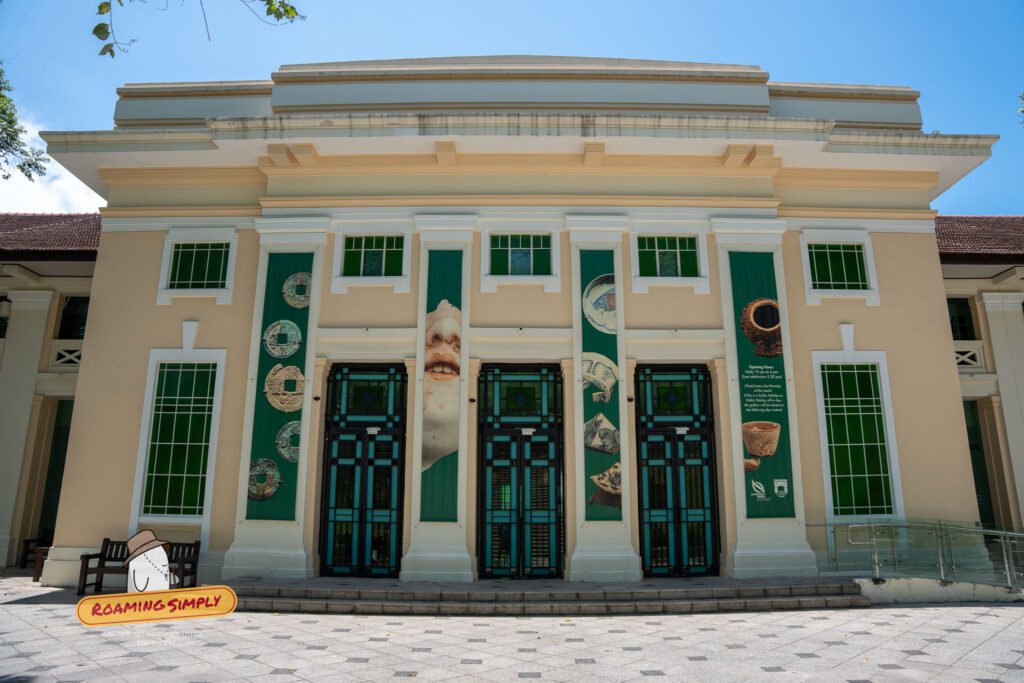
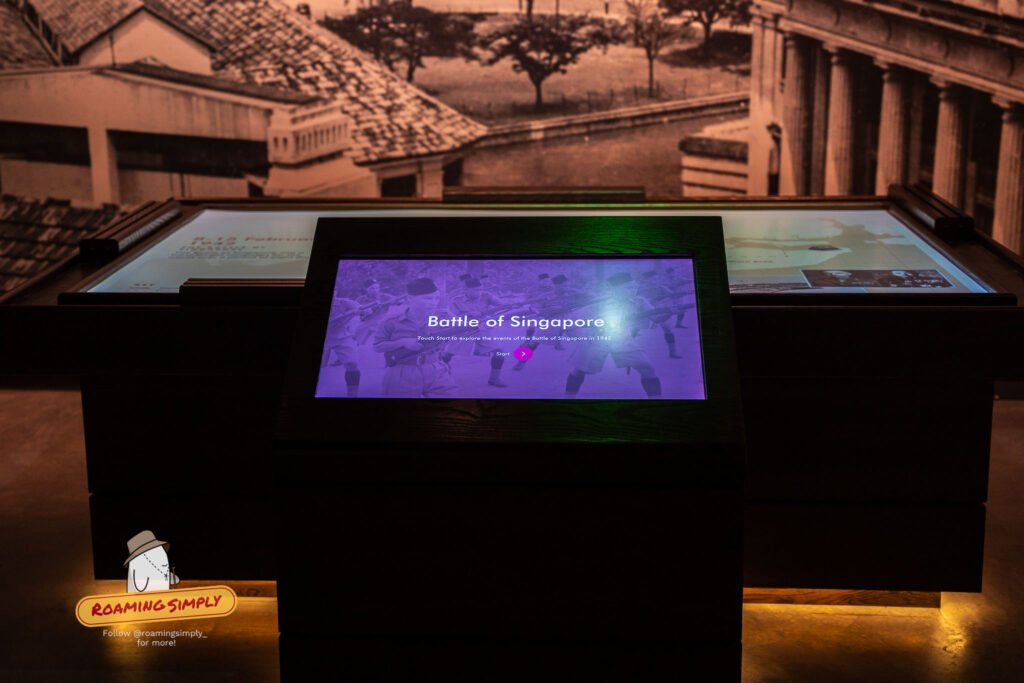
Our pick is on Level 1: an interactive display that maps the Battle of Singapore, from the troop movements to the surrender on 15 February 1942. The gallery is open daily from 10am to 6pm and closes on the last Monday of each month for maintenance.
Visitor Tips
The hill is steeper than it looks, and a little preparation makes the walk easier.
Before you go
- For the Tree Tunnel, arrive between 7am and 7.30am. The queue builds fast once the day warms up.
- Wear comfortable walking shoes. The park has uneven steps and steep slopes.
- Dress in light, breathable fabric and put on mosquito repellent.
- Bring a water bottle. There are a few water fountains and vending machines in the park.
Do These as a Pair
The Battle Box, then the Heritage Gallery. The gallery’s Battle of Singapore display ends with the surrender that was decided in the bunker. For another day, Fort Siloso on Sentosa is a restored coastal battery with its own Surrender Chambers. Read our Fort Siloso guide.
Free PDF guide
Make Fort Canning a full day
Day 1 of our free guide links Fort Canning with the National Gallery and the Asian Civilisations Museum, in the order that keeps you out of the midday sun.
Get the free guideThe Verdict: Is Fort Canning Park Worth It?
Fort Canning Park is far more than a viral staircase.
The Tree Tunnel is real and it is worth seeing. We queued about an hour for it, even at 7.30am, so be honest with yourself about why you are going. It is a great photo spot, and worth seeing as one.
What earns the morning is everything around it: the Forbidden Hill story, the bunker where the surrender of Singapore was decided, and the gallery display that pieces the battle together. For travellers who want to understand Singapore, it is a rewarding free walk in the city.
We walked the park, queued for the Tree Tunnel and went through the Heritage Gallery. We did not go inside the Battle Box on this visit, so its details here come from its own website.
Come for the history. The tunnel is a bonus.
Your Guide to Visiting Fort Canning
AddressFort Canning Park, bounded by Hill Street, Canning Rise, Clemenceau Avenue and River Valley Road. Heritage Gallery: Fort Canning Centre, 5 Cox Terrace, Singapore 179620. Battle Box: 2 Cox Terrace, Singapore 179622
Opening hoursPark: open 24 hours. Heritage Gallery: daily, 10am to 6pm, closed on the last Monday of the month. Battle Box: Tuesday to Sunday, 10am to 6pm.
AdmissionPark and Heritage Gallery: free. Battle Box: Basic Experience free, Enhanced Experience S$10 to S$20
Nearest MRTDhoby Ghaut (NS24/NE6/CC1) or Fort Canning (DT20)
Wheelchair accessFrom the drop-off point at the Cox Terrace roundabout only. Hours, admission and access checked October 2026 at nparks.gov.sg and battlebox.sg
Website and social
Photographs by RoamingSimply.
More places to explore in Singapore
Verified on site, with opening hours checked.
 Explore, Featured, Parks & nature, Singapore
Botanic Gardens Singapore: My Favourite Photo Spots
 Explore, Featured, Heritage sites, Singapore
Heritage Museum and CDL Green Gallery: A Quiet Cultural Stop
 Explore, Parks & nature, Singapore
National Orchid Garden Singapore: What to See and Why It’s Worth It
 Explore, Featured, Parks & nature, Singapore
Jurong Lake Gardens: Three Gardens Worth Half a Day
 Explore, Featured, Heritage sites, Singapore
A Guide to the Fort Siloso: History, Views & Tips
 Explore, Featured, Parks & nature, Singapore
Gardens by the Bay Singapore: What Is Free and What to Pay For
 Explore, Heritage sites, Singapore
Sultan Mosque: The Golden Dome and the Glass Bottles Beneath It
 Explore, Featured, Heritage sites, Singapore